Sunday, March 29, 2026
1:30 p.m. - 2:45 p.m. (GMT+02:00) Barcelona
Location: Centre de Cultura Contemporània de Barcelona and Livestream
Sunday, March 29, 2026
1:30 p.m. - 2:45 p.m. (GMT+02:00) Barcelona
Location: Centre de Cultura Contemporània de Barcelona and Livestream
The awareness of existential threats to humanity is growing–from climate collapse and pandemics to AI takeover to nuclear catastrophe. While these threats loom large in our collective imagination and feature in our literature, their specific contours are ill-defined. How should we think about the category of existential threat? Does the term obscure the differential impact that threats pose–for example to the powerful and to the weak? And might an emphasis on threats impede an innovative and creative politics oriented towards a more hopeful future?
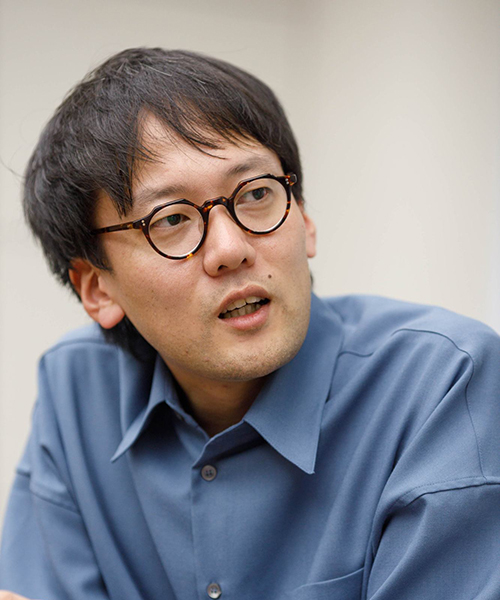
Kohei Saito is an associate professor of philosophy at the University of Tokyo and a leading contemporary Marxist thinker. His most recent book, Capital in the Anthropocene (2020), has sold more than half a million copies in Japan and was published in English as Slow Down: The Degrowth Manifesto in January 2024. Saito’s previous book, Karl Marx's Ecosocialism: Capital, Nature, and the Unfinished Critique of Political Economy (2017), which creatively explored the ecological dimension of Marx’s thought and its contemporary relevance, won the Deutscher Memorial Prize.
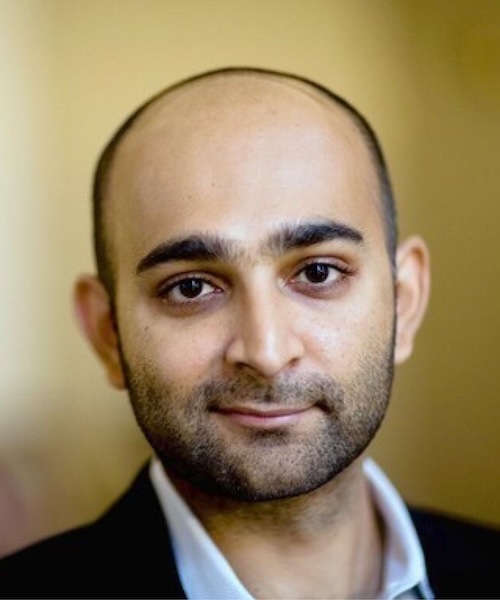
Mohsin Hamid is an acclaimed British Pakistani author known for creative fiction and commentary that address contemporary global issues. His recent novels include The Last White Man (2022) and Exit West (2017), which received the 2017 Los Angeles Times Book Prize for Fiction. His book The Reluctant Fundamentalist (2007) was shortlisted for the Man Booker Prize and later adapted into a successful film. Hamid’s engagement with themes of political turmoil, cultural displacement, and shifting individual and collective identities informs his influential essays on contemporary affairs in leading outlets including The Guardian, The New York Times, and The Paris Review.
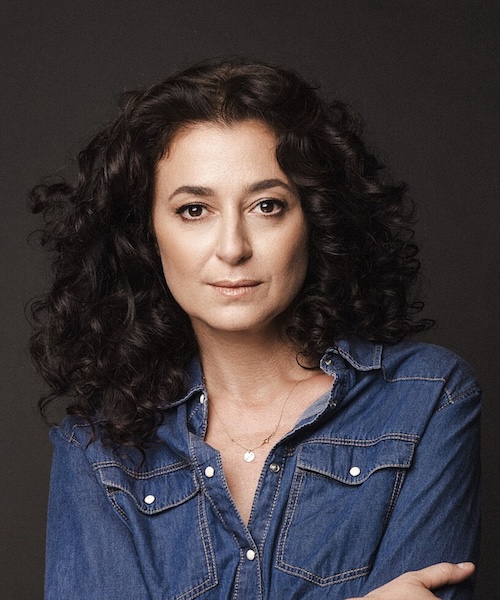
Ece Temelkuran is a Turkish novelist, a political thinker, and a leading analyst of the erosion of democracy and the challenge of populism on a global scale. She is the author of Together: 10 Choices for a Better Now (2021) as well as the acclaimed How to Lose a Country. The Seven Steps from Democracy to Dictatorship (2019). Her novels are published in several languages. A frequent contributor to the Guardian, New York Times, Le Monde, and other leading outlets, she is the recipient of the PEN Translates Award and the Freedom of Thought Award from the Human Rights Association of Turkey. In 2023 she received the El Mundo Award for her body of work.
Thomas Banchoff is vice president for global engagement at Georgetown University, where he also serves as professor in the Department of Government and the School of Foreign Service and director of the Berkley Center for Religion, Peace, and World Affairs, which he founded in 2006. His books include The Jesuits and Globalization: Historical Legacies and Contemporary Challenges (2016, with Jose Casanova); Embryo Politics: Ethics and Policy in Atlantic Democracies (2011); Religious Pluralism, Globalization, and World Politics (2008); and Democracy and the New Religious Pluralism (2007). His essays have appeared in Commonweal, The Tablet, The Washington Post, and other outlets.
Please email globaldialogues@georgetown.edu by March 25 with any accessibility requests. A good-faith effort will be made to fulfill all requests made after this date.